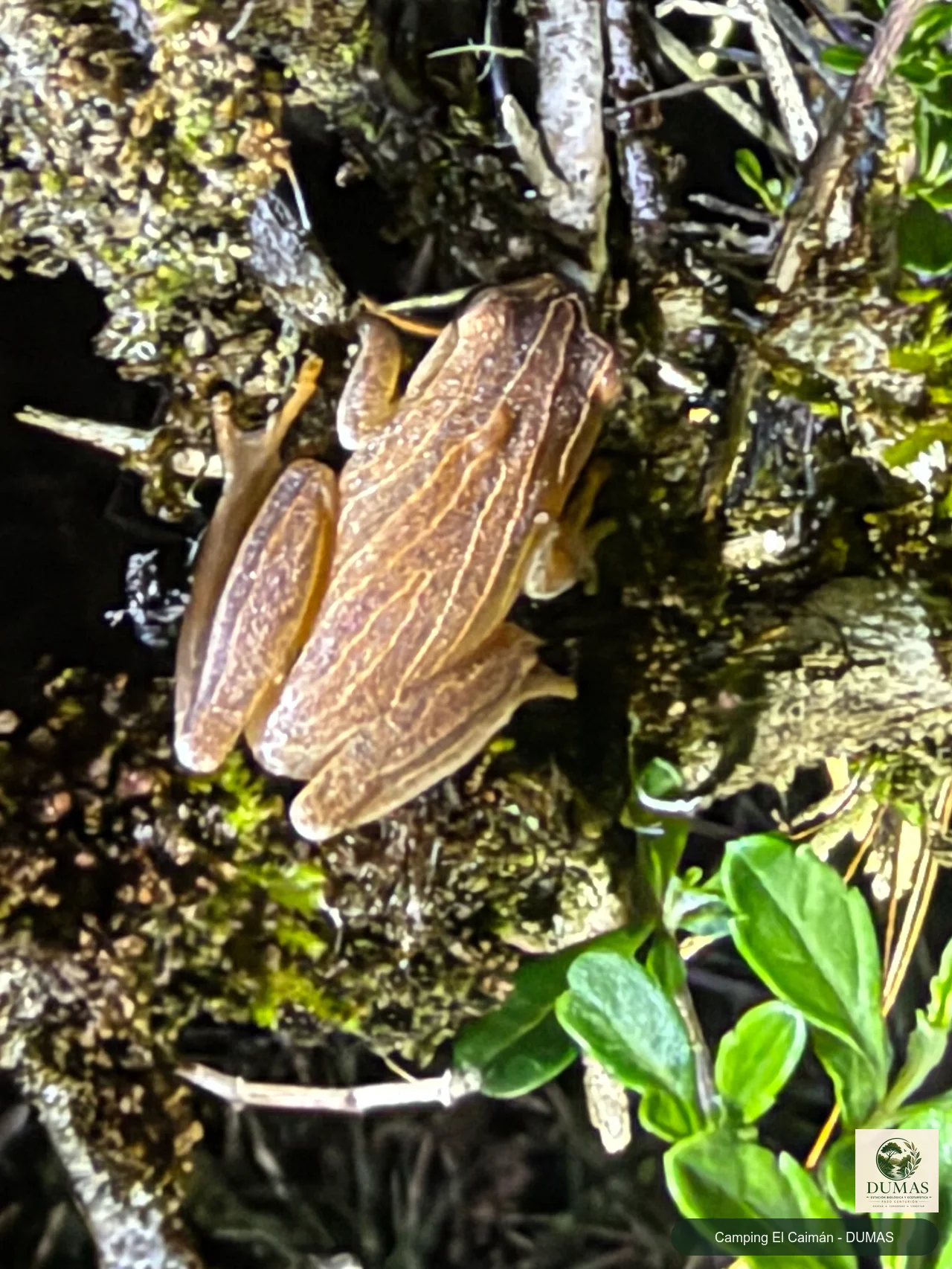
Featured species
Lesser Tree Frog
Dendropsophus minutus
A small tree frog associated with hilly environments and bodies of water. In Uruguay its distribution is limited and concentrated mainly in the north-east of the country. In Paso Centurión it forms part of an amphibian community associated with vegetation, wetlands and small bodies of water.
- Common name
- Lesser Tree Frog
- Scientific name
- Dendropsophus minutus
- Content
- Featured species
Public photographs
Visual records
Editorial introduction
About this species
The Lesser Tree Frog (Dendropsophus minutus) is a small amphibian in the family Hylidae. It measures only a few centimetres and has adhesive discs on its toes that allow it to move and remain on leaves, stems and branches. Its colour can vary, although it usually shows brownish or yellowish tones with darker longitudinal bands.
During the breeding season, males call from vegetation near the water, which often makes the species easier to detect by its call than by seeing it directly.
Dendropsophus minutus has a very broad distribution in South America, but the situation is different in Uruguay, where it occurs at the southern edge of its range and has been recorded mainly in hilly environments in the north-east. This contrast between a broad continental distribution and a much more localised presence in our country makes documented records of the species especially valuable.
Uruguay's national Red List for amphibians and reptiles assessed it as Endangered because of its restricted and fragmented distribution within the country.
Habitats and ways of life
Habitat and behaviour
It is mainly arboreal and, in Uruguay, is associated with hilly environments and the presence of water. It can be found on vegetation near pools, lagoons and other bodies of water, using leaves, stems and branches as shelter and activity sites. During the breeding period, mainly in the warmer months, males call from vegetation near the water. Females lay their eggs in association with aquatic vegetation and the larvae complete their development there.
Its diet includes small arthropods, including insects and spiders.
Local presence
In Paso Centurión
The species is present in Paso Centurión and is one of the amphibians we have been documenting through our own records. These records provide local evidence of its presence and, over time, help build a fuller picture of when it appears, which environments it uses and how its activity changes through the year.
4 published encounters · March–September 2026